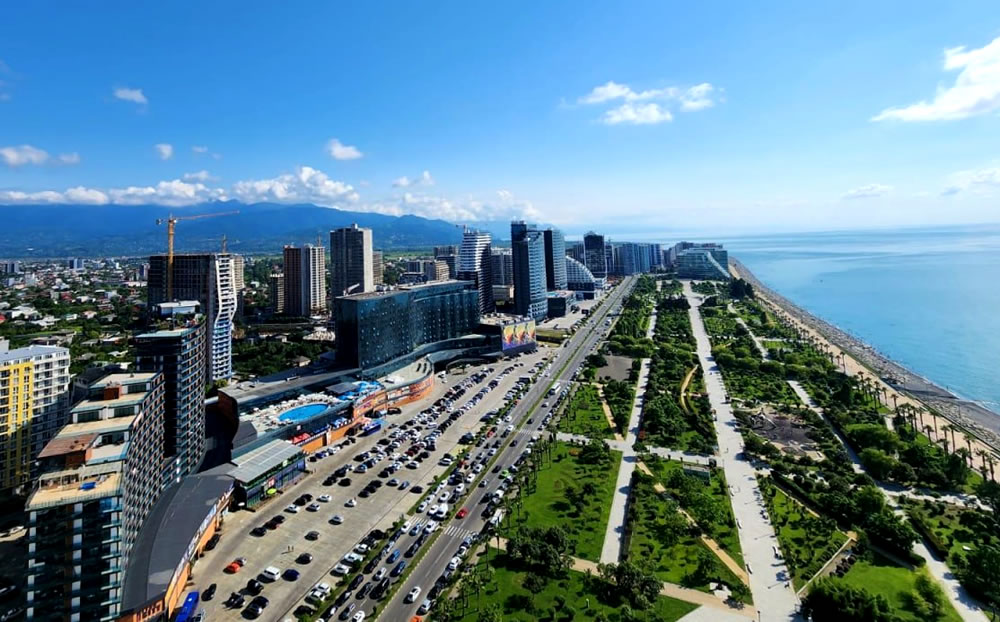
An unusual situation is unfolding in Batumi's housing market: square meter prices continue to rise, while rental rates are heading in the opposite direction. According to Galt & Taggart's analysis, demand remained steady in the second quarter of 2026, but internal signals are already emerging that could cool price growth in the future.
Data from the public registry shows that from April to June, 4,168 apartments were sold in the capital of Adjara - a 3.7% increase compared to the same period last year. Activity grew in both the new-build and secondary segments. This indicates that interest in Batumi is not fading: the city continues to attract both homebuyers and investors.
However, rising transaction numbers are not the sole indicator of a full recovery. While new-build sales have increased, they are still far from the peaks of 2022–2023. Moreover, supply remains substantial: a large number of properties are listed on the market, creating conditions for potential oversupply.
Prices, meanwhile, are moving upward despite this pressure. In June, the average cost of ready-to-move-in new-build housing reached $1,960 per square meter, up 10% year-over-year (from $1,784). In the secondary market for modern complexes, growth was more moderate - +6.5%, to $1,497 per sq. m.
This raises a critical question: how long can the primary market sustain such high price growth rates while construction volumes increase and rental yields gradually decline?
A first warning sign is already visible on the rental front. In Q2 2026, the average daily rental rate in Batumi fell to $34.6, down from $36.1 a year earlier - a 4% drop year-over-year.
For investors, this is a fundamental nuance: the asset's value is rising, but the income it generates is shrinking. The longer this imbalance persists, the wider the gap between purchase price and the property's real return.
For now, Batumi maintains an attractive yield - around 7% annually, which remains a solid figure and continues to support investment interest. However, the key question is shifting: property prices are outpacing rental income growth.
If new construction continues to expand and rental rates keep declining, sustaining the current pace of price appreciation on the primary market will become increasingly difficult. This does not signal an imminent crisis, but the market is clearly entering a phase where high demand alone is no longer enough to drive further price increases.
That is why the current situation in Batumi is especially intriguing for investors. Buying property solely in anticipation of future price appreciation is becoming a less obvious strategy. Another metric is moving to the forefront - how much real cash flow a given property can actually deliver to its owner.
The market is still growing, but its math is changing: apartments are getting more expensive, while rental yields are compressing. If this trend persists, a property's main advantage will no longer be a rosy price-growth forecast, but rather its ability to generate stable cash flow.