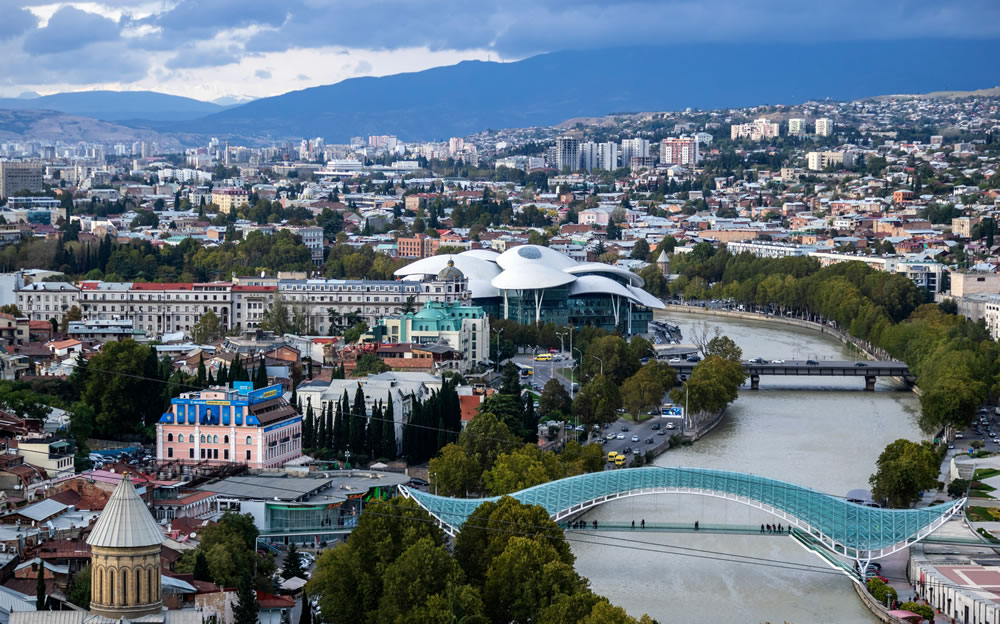
After several years of rapid price growth for housing in Tbilisi and Batumi, analysts at Colliers expect that in 2026, the Georgian market will transition into a phase of relatively stable prices. This does not mean a freeze in activity, but rather a shift toward a more mature growth model where yield and quality matter more than speculation.
From Price Surge to Stabilization
Since 2020, housing in Georgia's key cities has become significantly more expensive - especially in Tbilisi and the coastal locations of Batumi. This was driven by a combination of migration, an influx of foreigners, tourism growth, and the development of the IT and service economy.
Now, according to Colliers' assessment, the market is gradually leveling out:
- Stable price dynamics are expected in most segments.
- Moderate growth is possible in high-quality projects and scarce locations.
- Activity is shifting from speculative buying to more conscious investing.
Tbilisi vs. Batumi: The Differences Are Growing
The capital and the main sea resort remain the market's locomotives, but the logic of demand differs:
Tbilisi - The focus is on housing for permanent residence, compact investment apartments, and districts with developed infrastructure (transport, schools, offices, multi-functional centers).
Batumi - A combination of resort and investment demand, with an emphasis on short-term and daily rental, attracting interest from foreign buyers and investors.
Against the backdrop of price stabilization, Colliers emphasizes that the gap between strong and weak locations will only widen. Areas with chaotic development, poor infrastructure, and problematic property management may show zero or even negative dynamics.
Batumi: Oversupply of Apartments and Falling Yields
In a study dedicated to Batumi, analysts at Galt & Taggart note that buyer activity in the apartment market has already declined. In 2022-2023, 3,000-3,400 new build apartments were sold annually; in 2024, that number dropped to about 2,000. In the first eight months of 2025, only 1,500 units were sold, with a supply of around 6,000. An oversupply is evident. About 30% of new properties enter the secondary market within the first two years of being commissioned, and sales in this segment have nearly halved compared to 2022.
Batumi's housing stock continues to grow. In 2020, there were 86,000 apartments; by 2024, that number had reached 119,000. Between 2025 and 2029, plans call for introducing approximately 58,000 new apartments, of which 46,300 are intended for short-term rental - that is 80% of the total volume. In some districts, the share of investment apartments reaches 96%.
For investors, this is a worrying signal. Amidst overproduction, gross yields have already begun to decline: according to Galt & Taggart, they were estimated at 10% in 2023, around 7.4% in 2025. In the future, the figure could drop to 5.1% and even to 3.4%.
The Real Profitability of Apartments: Calculations by International Investment
Experts at International Investment emphasize that the nominal apartment yield of 6-7% is unattainable in reality. After deducting all operating expenses - cleaning, commissions, maintenance, vacancies, utilities, repairs - the actual figure shifts into the 3-4% range. And this is only under professional management; often, real figures are lower.
Additionally, calculations show that in a scenario where the apartment stock doubles - the very growth forecast by Galt & Taggart - the real net yield could fall to 1.5-2%.
Example Calculation for a 35 sq. m Studio Priced at $59,500:
Long-term rental: With a gross income of $3,300 (11 months at $300), the net income after all expenses is about $1,870, which is a 3% annual return with a payback period of about 32 years.
Daily rental: It looks better in gross figures - $5,965 per year with an average occupancy of 43.13%. However, costs (service commissions, cleaning, utilities, consumables, service fees) reduce the net income to $1,714, or approximately 2.8%.
The average annual night rate in standard apartments is $34, with 31% occupancy, yielding only $3,847 in gross income. In practice, without professional management, many properties break even or go into the red due to low year-round occupancy.
Apartments lack a consolidated operating budget, so each owner bears costs individually. All expenses - from service fees to repairs and vacancies - fall on a single owner. Most buildings are constructed without infrastructure and without unified operational standards, which lowers the quality of the product and limits the ability to maintain prices.
From Apartments to Hotels: A Shift in the Investment Model
In these conditions, investor interest is gradually shifting toward hotel projects, where the operational model is fundamentally different. Demand is supported by the brand, infrastructure, marketing, and standardized management, while costs are evenly distributed across the entire property.
The economics in the hotel segment are also significantly different. With a nightly rate of $310 in the low season and $520 in the high season, along with 274 guaranteed bookings per year, the gross income reaches $57,714. After deducting expenses for staff, marketing, and technical maintenance ($23,086), the net profit is $34,629.
Occupancy at branded hotels in Batumi has been growing for the third consecutive year: the rate was 68.6% in 2022, 70% in 2023, and 71% in 2024. The average nightly cost is $286, and this level is maintained due to infrastructure, marketing, and stable demand throughout the year.
The contrast with apartments is clear:
- Average night rate: $34 vs. $286.
- Occupancy: 31% vs. 68.6%.
- Gross income: about $3,847 vs. over $70,000.
Even considering the difference in cost per square meter ($1,890 for apartments and $8,300 for a branded luxury hotel), efficiency remains on the side of hotel projects: the yield per 1 sq. m is almost five times higher.
These high results are ensured not only by occupancy. The hotel operates a restaurant, reception, reservations department, marketing, and technical service - all of which help maintain the room rate and ensure even occupancy. For the owner, this means no operational risks and a predictable cash flow.
At the same time, there are still few quality hotels in Batumi: city hotels and a few international chains predominate. Consequently, demand for properties in the luxury and all-inclusive formats remains high. One of the most significant projects - the Wyndham Grand Batumi Gonio hotel complex - is being developed in a prestigious resort area that has also attracted the attention of other international companies, including a major developer from the UAE. Experts are confident that the position of luxury hotels will strengthen, ensuring year-round stability and higher profitability.