The New Reality of Batumi's Market
By 2026, Batumi's real estate market has fully evolved into a multipolar system. The long-standing upward trend continues, but it is no longer uniform across all segments. Districts, property classes, and apartment formats now show divergent dynamics. For a well-informed decision, general impressions are no longer sufficient - detailed segmentation is required: where prices are still rising, where stabilization has set in, and where an entry window is opening. This review focuses precisely on how the price per square meter is shaped by location and investment appeal.
The key feature of Batumi's market is diversified demand. It brings together the interests of local residents, relocants, and foreign investors. This structure makes the market resilient to sharp declines: a slowdown in one driver is offset by activity in another. Therefore, the current price level reflects not speculative expectations, but genuine, long-term buyer interest.
Pricing by District: Where It's More Expensive and Where It's More Promising
Geography remains the primary pricing factor. Each zone of Batumi has its own character and price range.
The Historic Center and Old Boulevard hold the highest price points. There is virtually no available land for new construction here, and new premium-class projects are rare and spot-specific. Luxury residences such as Piazza Residence Batumi offer a lifestyle in the city's cultural heart. Demand in this location consistently outpaces supply, ensuring steady, organic value appreciation. Apartments here are a reliable asset with predictable performance.
New Batumi and New Boulevard have become the city's main investment arena. Here, the price range is broader, and the architectural focus is on multi-functional skyscrapers and apartment hotels with well-developed internal infrastructure. The key advantage of this zone is its still-unrealized growth potential, which promises early-stage investors substantial gains from future price increases.
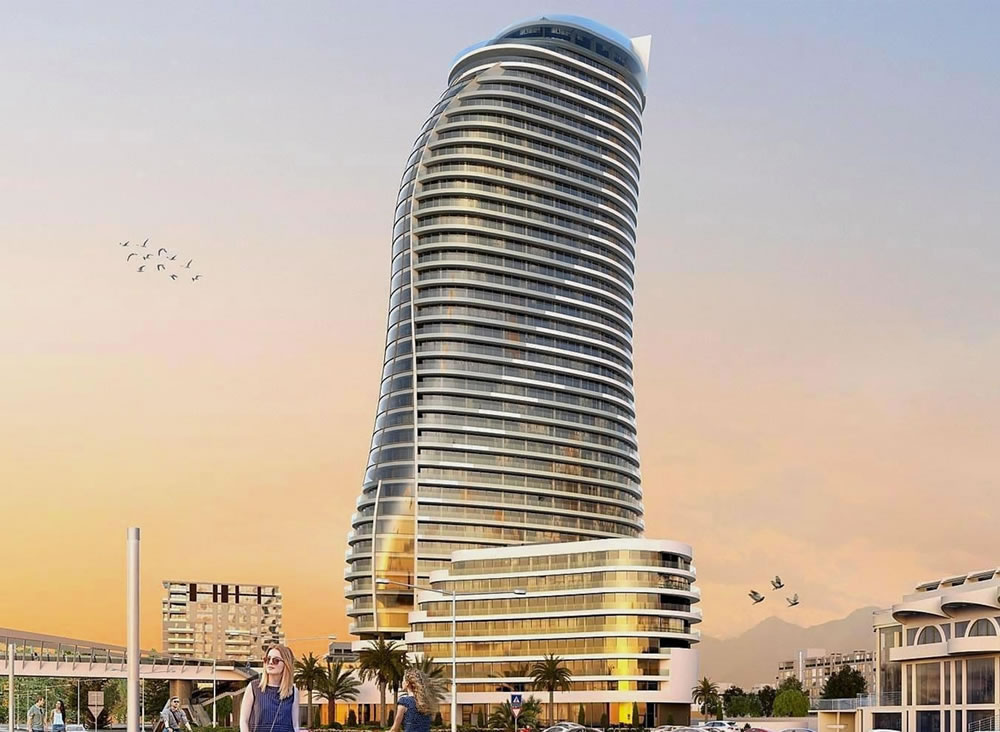
Separately, the new mega-zones reshaping the Black Sea coastline deserve attention. More and more luxury buyers are focusing on the area near Batumi's artificial island. This is where the Panorama complex is located, combining cutting-edge architecture with exclusive services. Its internal infrastructure includes restaurants, bars, an outdoor pool, a spa center, a fitness club, a business lounge, conference halls, two-level parking, and even a casino. Thanks to this level of amenities, the price per square meter in this location acquires a fundamentally different value compared to standard offerings.
How Prices Have Changed in Recent Years
Over the past few years, Adjara's market has undergone profound transformations. Previously, Batumi was seen primarily as a seasonal resort for visitors from the CIS countries; today, the story is completely different. The arrival of international hotel chains, infrastructure upgrades, and Georgia's image as a safe investment destination have driven annual double-digit growth in square-meter prices. This is not a short-term wave but a natural transition to international standards, where price reflects global quality requirements.
A particularly notable price acceleration occurred after the buyer pool expanded. The influx of foreign investors pushed developers to abandon standard economy-class buildings in favor of premium solutions. At the same time, construction materials became more expensive, and urban regulations tightened, raising project costs. As a result, those who delayed their decisions several years ago are now buying similar apartments across Batumi at significantly higher prices - clearly illustrating the value of timely entry.
From the perspective of 2026, the market has shifted from a speculative phase to predictable stability. Attentive investors tracking Central Management Group projects see that further growth is now tied to a project's internal offerings, the managing brand, and long-term rental potential. This stability is a reliable signal for sound investment: the risk of unexpected swings is minimal, and long-term appreciation appears logical and well-founded.
Forecast 2026–2030: What Lies Ahead for Prices
The next four years will maintain growth momentum, but with pronounced segmentation. By 2030, a notable price surge will affect primarily projects with unique concepts and rich internal infrastructure. Ordinary, functionally limited residential buildings, by contrast, will enter a stabilization phase or even a slight correction - buyers are becoming more discerning and favor quality over quantity. Thus, the future value of an apartment will increasingly depend on what the complex can offer the owner beyond the living space itself.
Another growth driver will be current and planned urban megaprojects. Modernization of the shoreline is creating new centers of attraction, automatically lifting prices in adjacent areas.
Ultimately, the period from 2026 to 2030 can be considered a favorable window for a thoughtful investment move. Even though the initial entry threshold is now higher than it was a few years ago, the market has become far more transparent and predictable, and its direction is clear. Leading developers are already responding to these demands and are creating multi-functional complexes that will be in high demand tomorrow. The secret to long-term profitability lies in choosing a project whose price accounts not only for today's market conditions but also for the realities of 2030.